Yun Bai (白云)
Greetings! I am a Ph.D. candidate at Duke University, working in the Ni Lab, developing programmable materials with real-time control over mechanical properties.
I earned my M.S. in Materials Science from Northwestern University, where I worked in the Rogers Research Group. My undergraduate training was at Huazhong University of Science and Technology (HUST; 华中科技大学).

Durham, NC, USA
yun.bai@duke.edu
Education
Ph.D., Mechanical Engineering and Materials Science, 2021–Present
Research assistant, 2021–Present
M.S., Materials Science and Engineering, 2019–2020
Graduate student research assistant, 2019–2020

B.S., Materials Science and Engineering, 2015–2019
Undergraduate student research assistant, 2018–2019
News
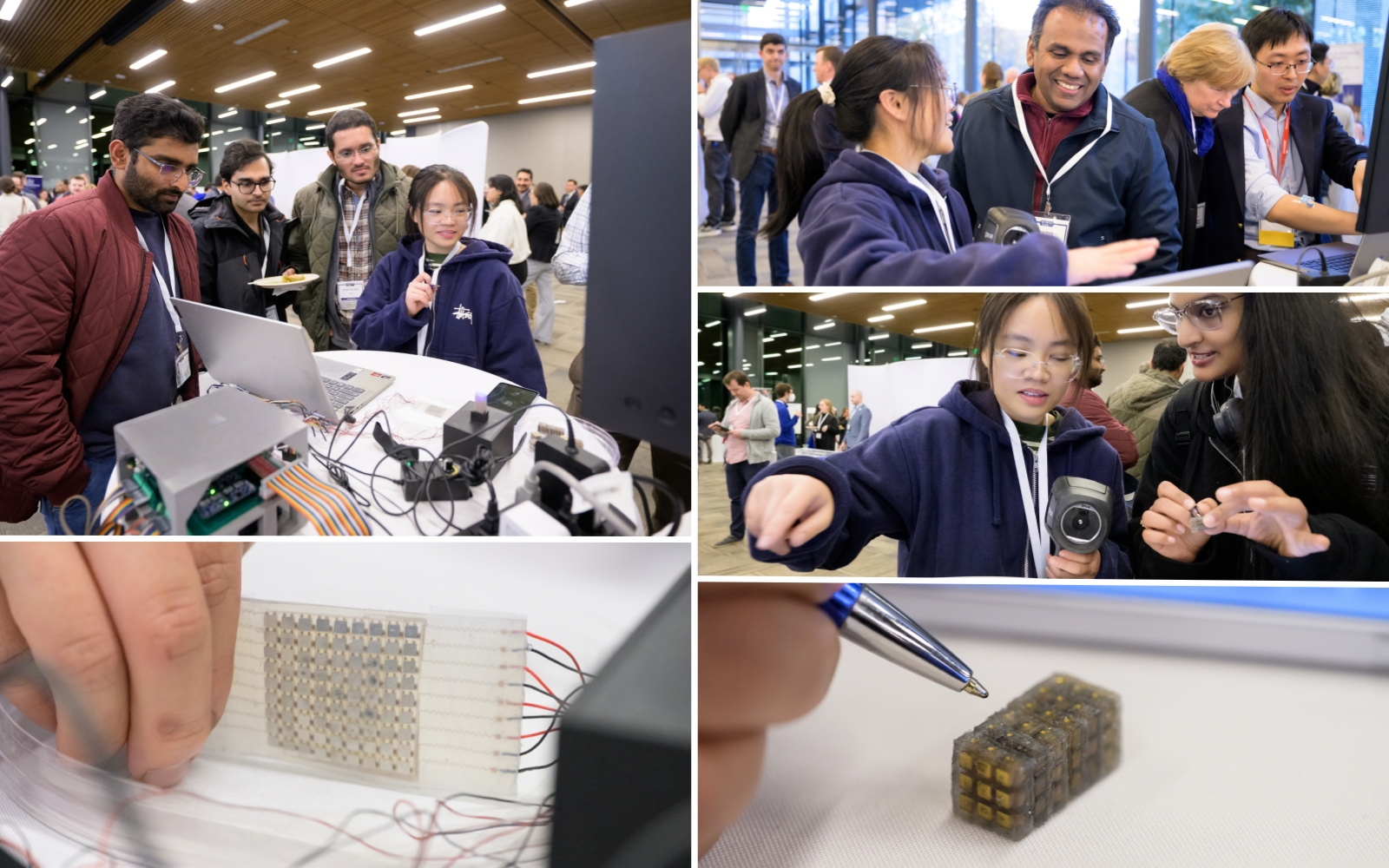
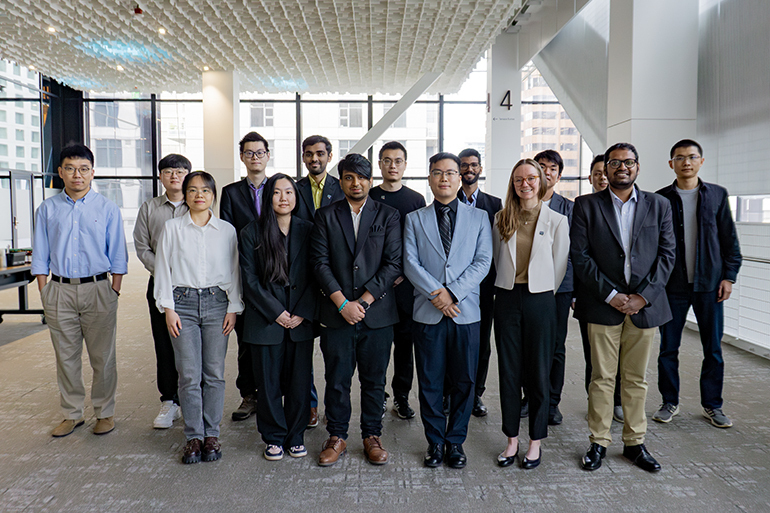
Durham, NC, USA
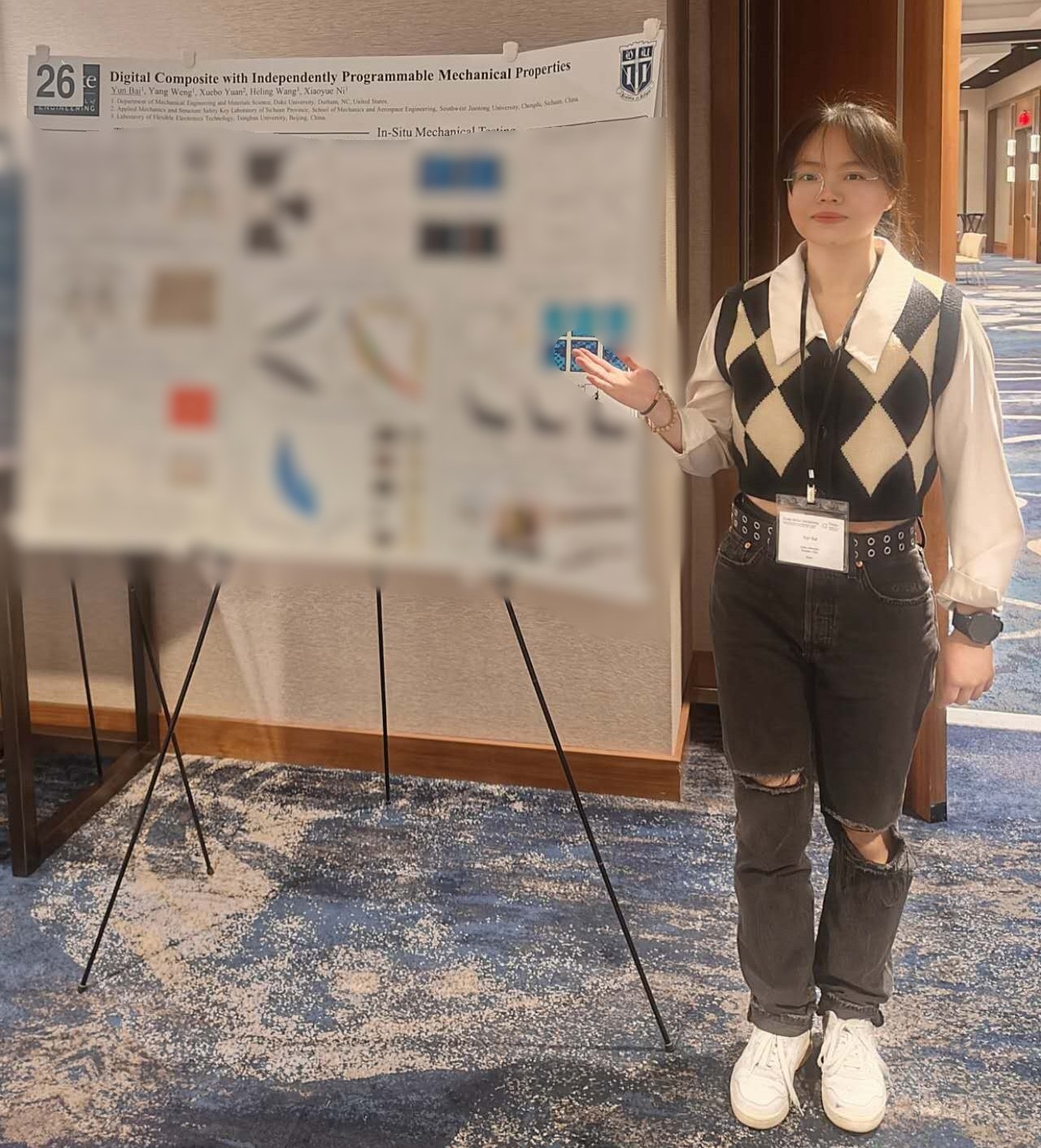
Seattle, WA, USA
Durham, NC, USA
Ventura, CA, USA
Research Interests
· Programmable materials, active mechanical metamaterials, and robotic materials.
· Flexible electronics, precision measurement, and non-destructive testing.
Programmable Materials
Programmable mechanical properties
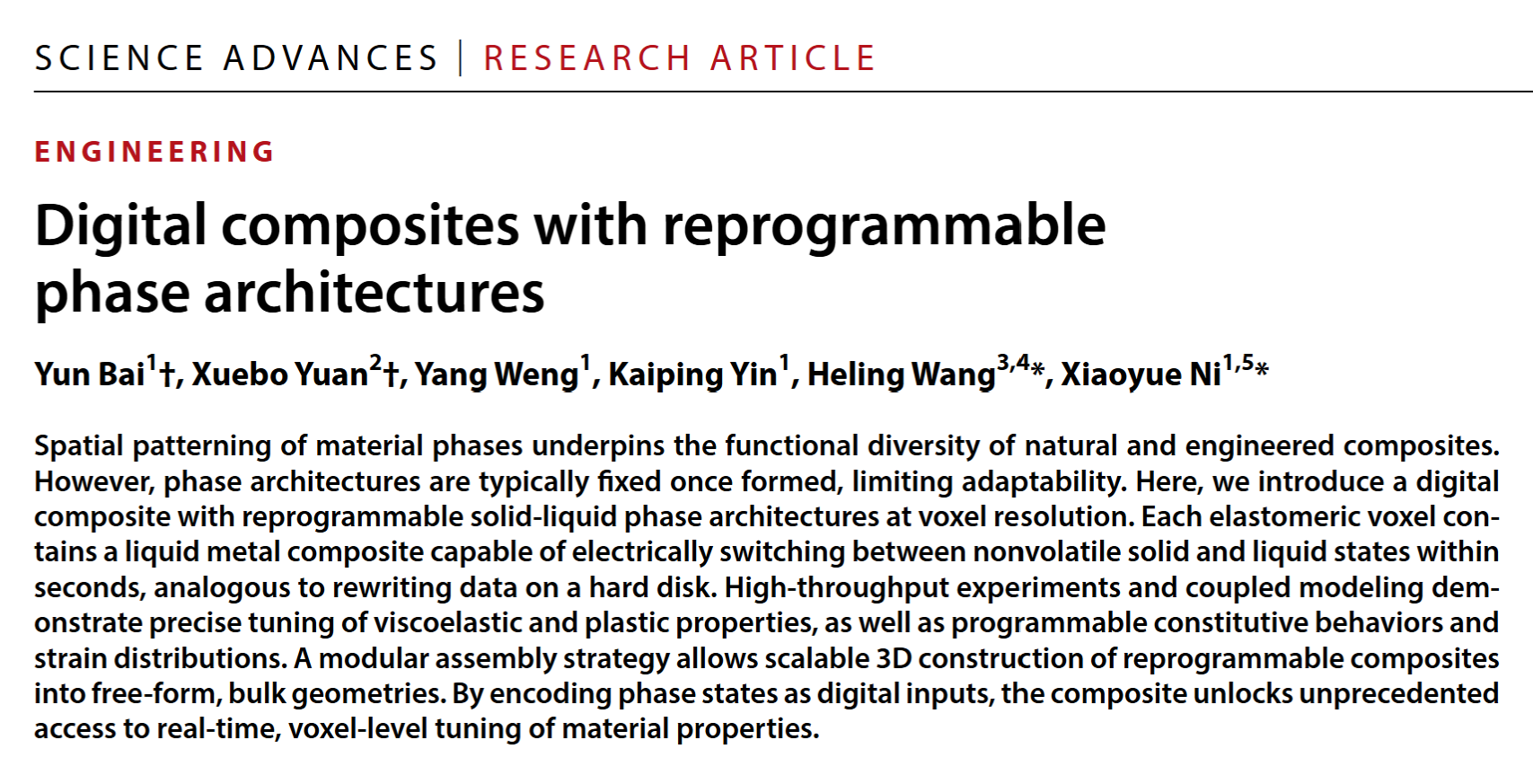
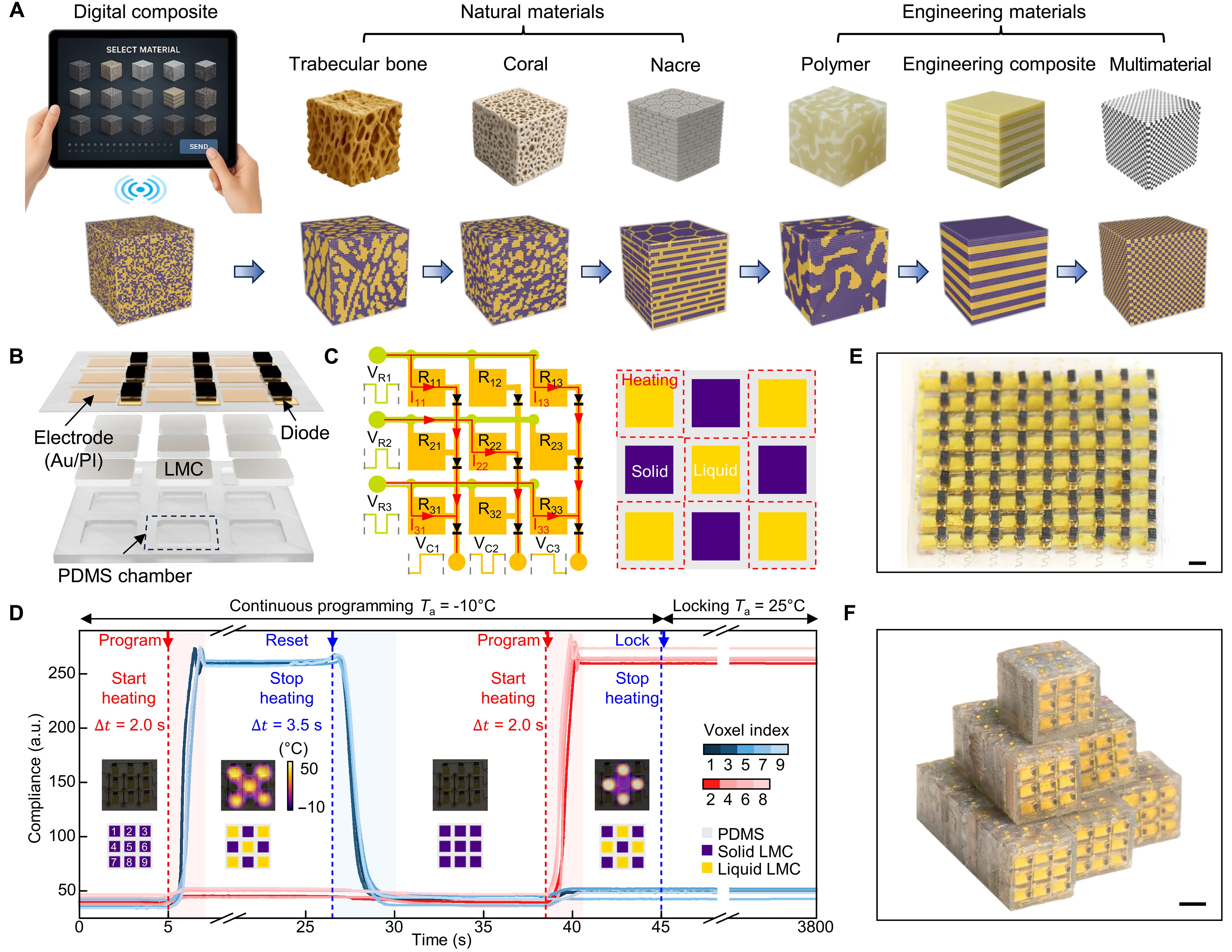
we introduce a reprogrammable digital composite that enables voxel-level rewriting of solid–liquid phase architectures—allowing mechanical properties to be tuned far beyond just “soft” or “rigid.” Each elastomeric voxel contains a liquid metal composite, integrated with flexible electronics. Through a simple user interface, digital signals drive localized heating to selectively melt and re-solidify voxels, “writing” new architectures on demand. High-throughput experiments and coupled modeling show precise tuning of viscoelastic and plastic behaviors, along with programmable constitutive responses and strain distributions. A modular assembly strategy further enables scalable 3D construction into free-form bulk geometries. This work bridges programmable materials, mechanical metamaterials, and soft robotics, opening a pathway toward material-enabled (passive) control through digitally encoded phase states.
A digital composite material featuring solid–liquid phase programming at the individual voxel level.
Related Paper: [Science Advances, 2026]
News press: [Programmable Material Mimics Life’s Flexibility, 2026]
Programmable shape morphing
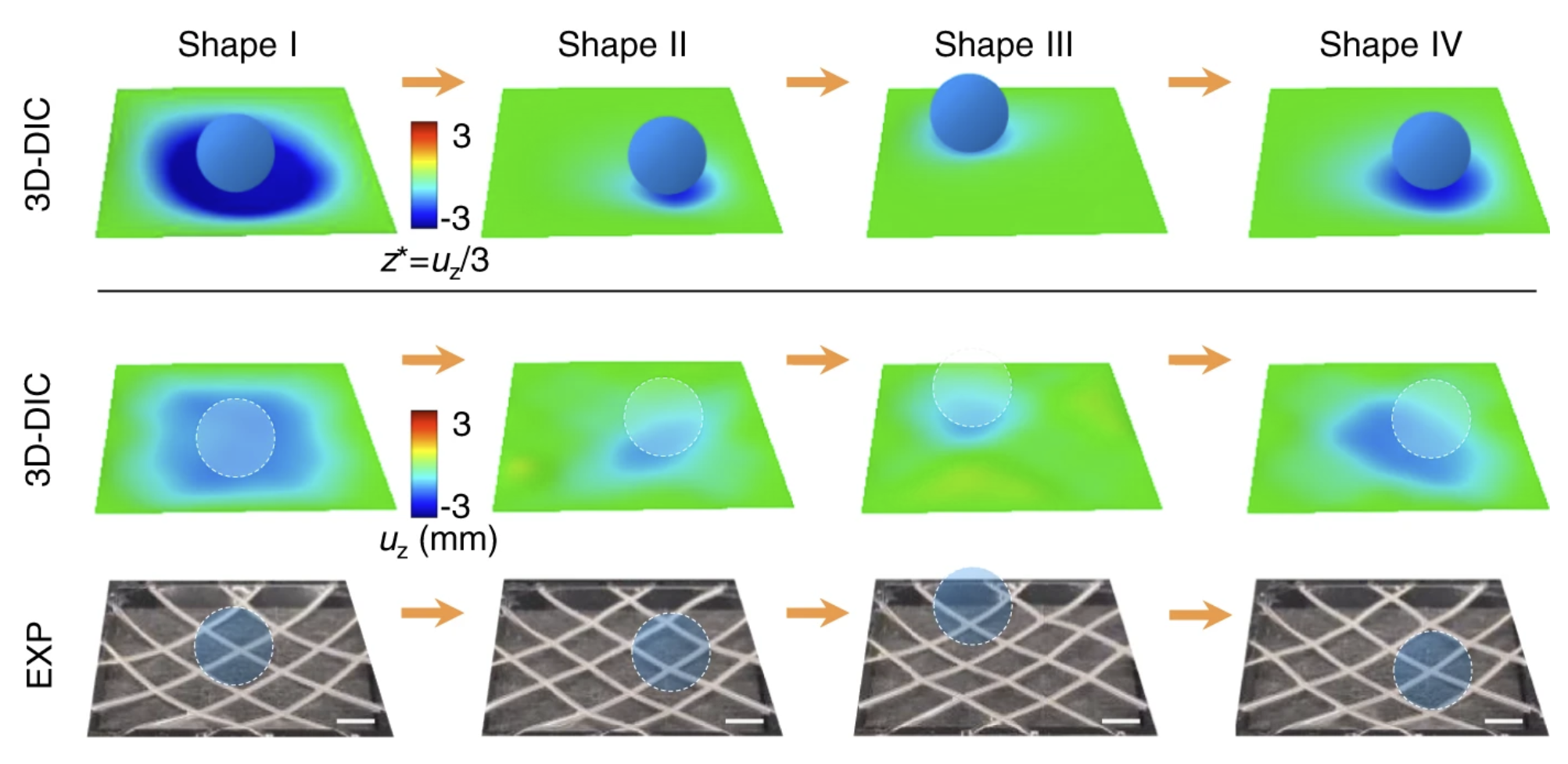
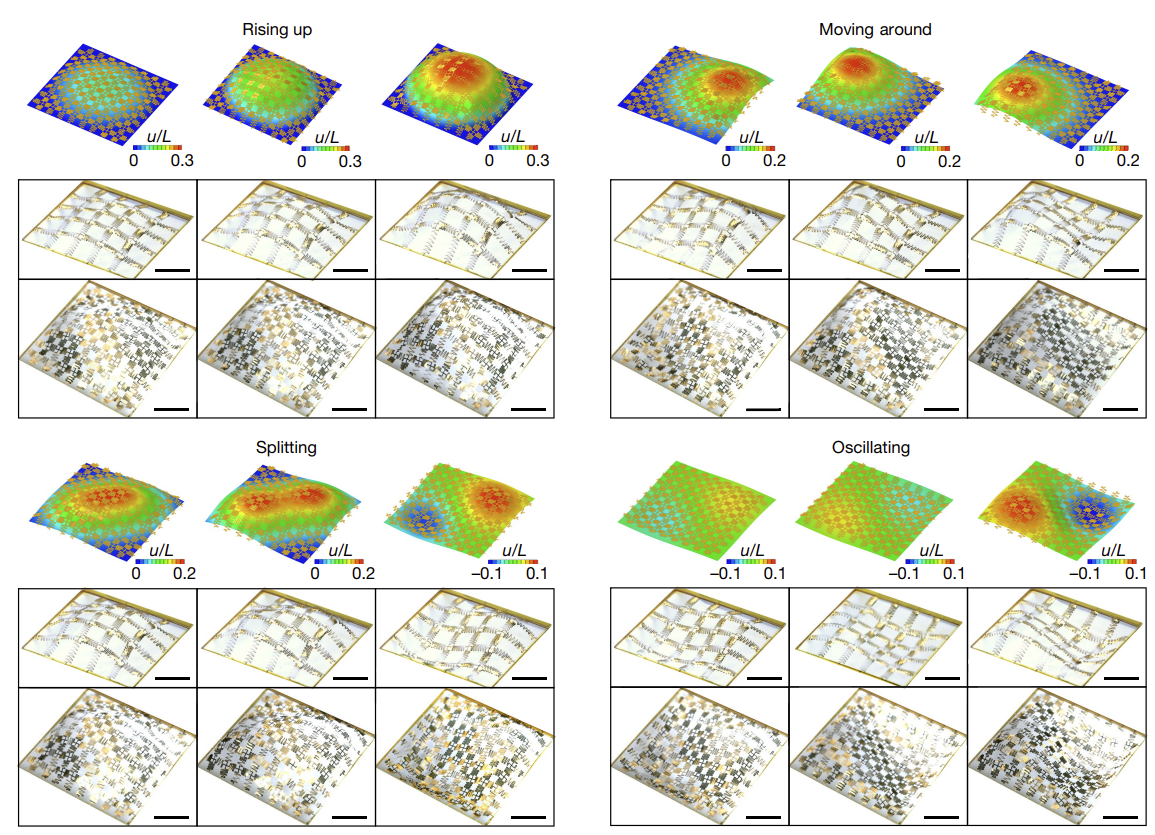
We developed a soft material architecture with planar serpentine conductors for rapid shape shifting. Programmable voltage control enables electromagnetic actuation with a linear voltage–displacement response, supporting model-driven inverse design. Integrated 3D imaging and experiment-driven optimization allow the metasurface to autonomously morph into target shapes without prior knowledge of system physics.
A 4×4 and an 8×8 sample morphing into a dynamic shape-shifting process through model-driven optimization.
A 4×4 sample dynamically morphing three abstract shapes through experiment-driven optimization.
A 4×4 sample demonstrating a real-time morphing scheme through experiment-driven approach to learn the continuously evolving surface of a palm.
Related Paper: [Nature, 2022]
News press: [Artificial Soft Surface Autonomously Mimics Shapes From Nature, 2022]
Bioelectronics
Epidermal sweat microfluidic systems
We developed microfluidic networks, integrated valves, and microscale optical cuvettes fabricated by 3D printing in hard/soft hybrid material systems to enhance system performance. These advances enable accurate spectroscopic and fluorometric assays. Field studies demonstrate that the microcuvette systems can evaluate the concentrations of copper, chloride, and glucose in sweat, as well as sweat pH, with laboratory-grade accuracy and sensitivity.
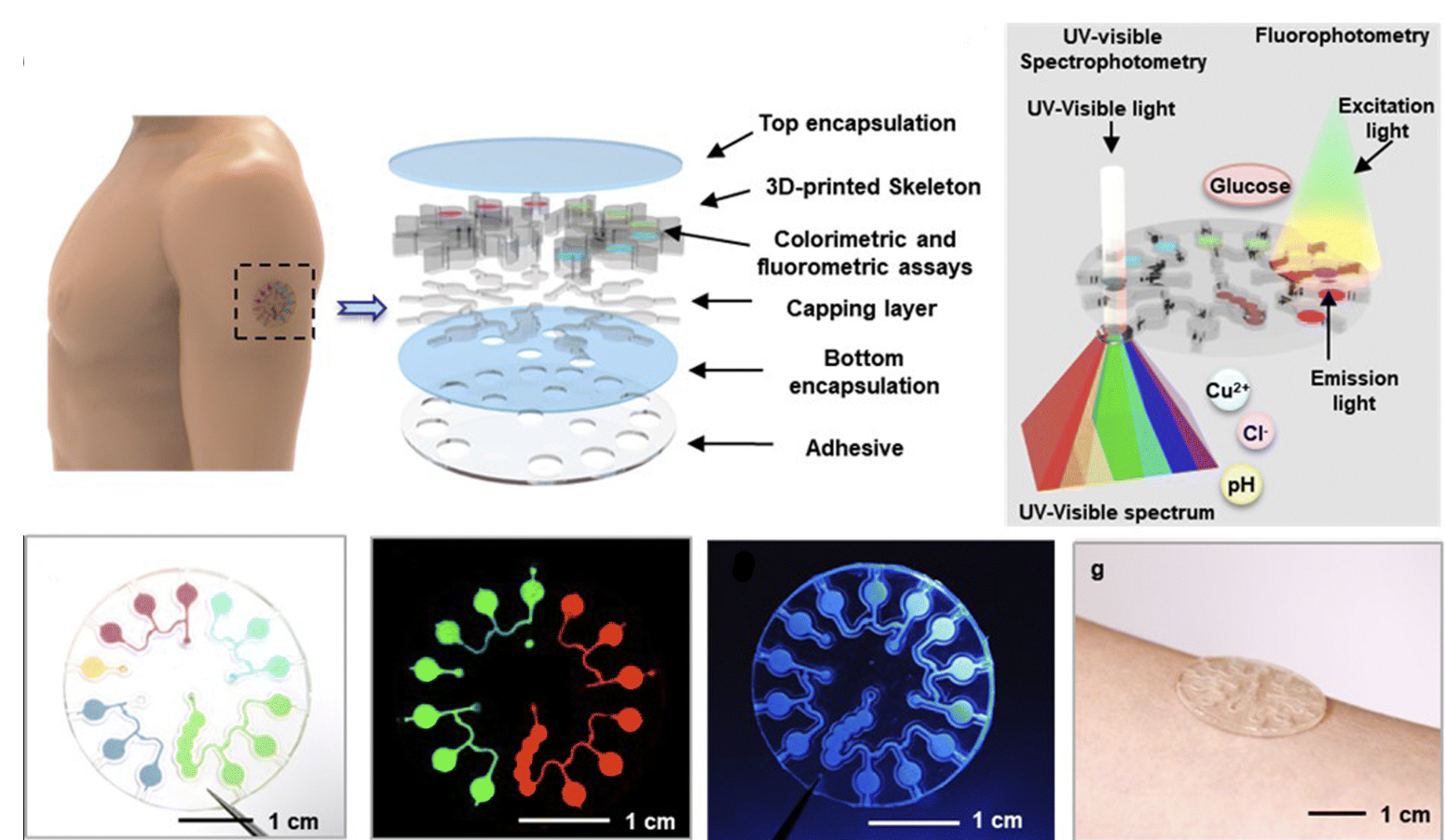
3D-printed, skin-compatible microfluidic system for capture, storage and analysis of sweat using spectrophotometric and fluorophotometric techniques.
Related Paper: [Materials Horizons, 2023]
Multi-lateral optofluidic microsystems
We developed a wireless, battery-free, miniaturized multichannel optofluidic platform for optogenetics and photopharmacology, specifically designed for use with small, freely moving animals in isolation or interacting groups within large enclosures. This system addresses the limitations of alternative technologies through:
(1) customizable, multilateral probes with soft microfluidic and electronic interconnections that enable versatile positioning across the nervous system and support synchronized or desynchronized patterns of modulation in the same or different regions;
(2) passive microfluidic check valves for precise control of flow dynamics;
(3) designs that allow real-time, independent multichannel control of both fluidic delivery and optical illumination, along with individual addressability of up to 256 devices within a single experimental field via near-field communication (NFC);
(4) engineering strategies that leverage low-cost commercial components, scalable manufacturing and assembly procedures, user-friendly open-source graphical user interfaces (GUIs), and simple implantation methods to promote broad adoption within the neuroscience community.
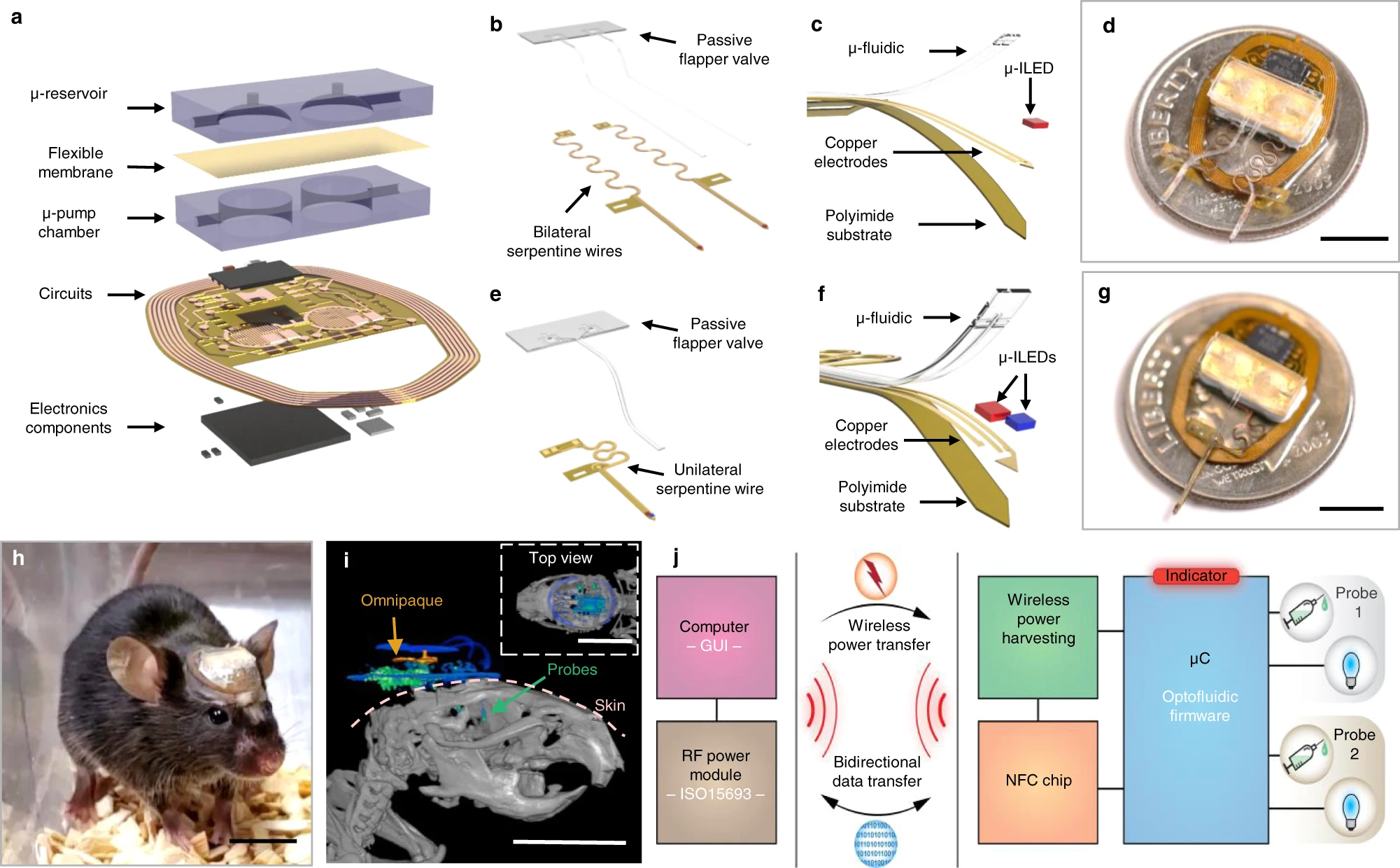
Optofluidic device with bilateral neural probes and optical (µ-ILED) implanted on a mouse brain with iodinated contrast (Omnipaque) to demonstrate the location of the µ-reservoirs.
Related Paper: [Nature communications, 2022]
Publications
The best is yet to come.
Journal Papers
Digital composites with reprogrammable phase architectures.
Yun Bai, Xuebo Yuan, Yang Weng, Kaiping Yin, Heling Wang*, Xiaoyue Ni*
Science Advances, 2026
3D-printed epidermal sweat microfluidic systems with integrated microcuvettes for precise spectroscopic and fluorometric biochemical assays.
Yixin Wu, Evangelos E Kanatzidis, Raudel Avila, Mingyu Zhou, Yun Bai, Shulin Chen, Yurina Sekine, Joohee Kim, Yujun Deng, Hexia Guo, Yi Zhang, Roozbeh Ghaffari, Yonggang Huang, John A Rogers*
Materials Horizons, 2023
Soft shape-programmable surfaces by fast electromagnetic actuation of liquid metal networks.
Xinchen Ni, Haiwen Luan, Jin-Tae Kim, Sam I Rogge, Yun Bai, Jean Won Kwak, Shangliangzi Liu, Da Som Yang, Shuo Li, Shupeng Li, Zhengwei Li, Yamin Zhang, Changsheng Wu, Xiaoyue Ni*, Yonggang Huang*, Heling Wang*, John A Rogers*
Nature communications, 2022
A dynamically reprogrammable surface with self-evolving shape morphing.
Yun Bai, Heling Wang, Yeguang Xue, Yuxin Pan, Jin-Tae Kim, Xinchen Ni, Tzu-Li Liu, Yiyuan Yang, Mengdi Han, Yonggang Huang*, John A Rogers*, Xiaoyue Ni*
Nature, 2022
Wireless multi-lateral optofluidic microsystems for real-time programmable optogenetics and photopharmacology.
Yixin Wu, Mingzheng Wu, Abraham Vázquez-Guardado, Joohee Kim, Xin Zhang, Raudel Avila, Jin-Tae Kim, Yujun Deng, Yongjoon Yu, Sarah Melzer, Yun Bai, Hyoseo Yoon, Lingzi Meng, Yi Zhang, Hexia Guo, Liu Hong, Evangelos E Kanatzidis, Chad R Haney, Emily A Waters, Anthony R Banks, Ziying Hu, Ferrona Lie, Leonardo P Chamorro, Bernardo L Sabatini, Yonggang Huang*, Yevgenia Kozorovitskiy*, John A Rogers*
Nature communications, 2022
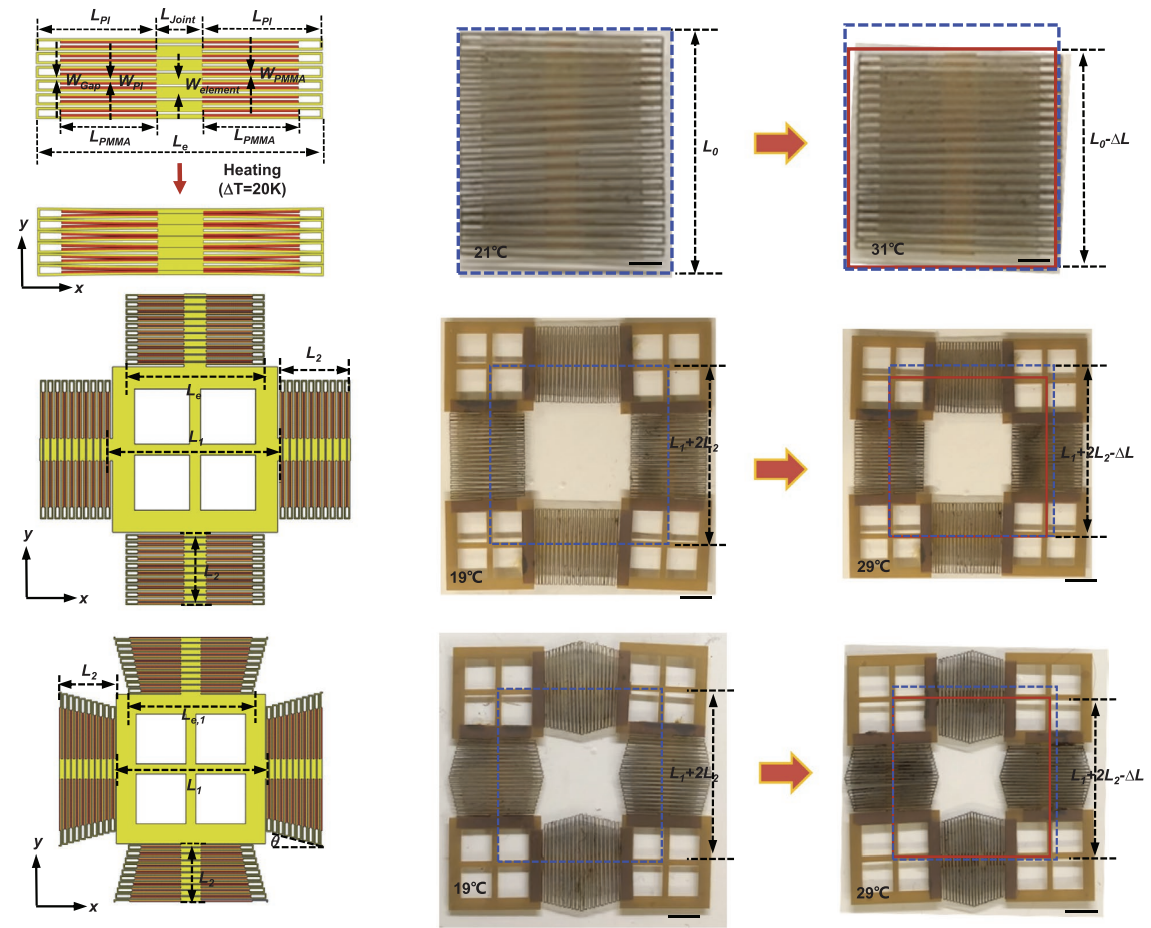
Designing mechanical metamaterials with kirigami‐inspired, hierarchical constructions for giant positive and negative thermal expansion.
Xiaogang Guo, Xiaoyue Ni, Jiahong Li, Hang Zhang, Fan Zhang, Huabin Yu, Jun Wu, Yun Bai, Hongshuai Lei, Yonggang Huang, John A Rogers*, Yihui Zhang*
Advanced Materials, 2021
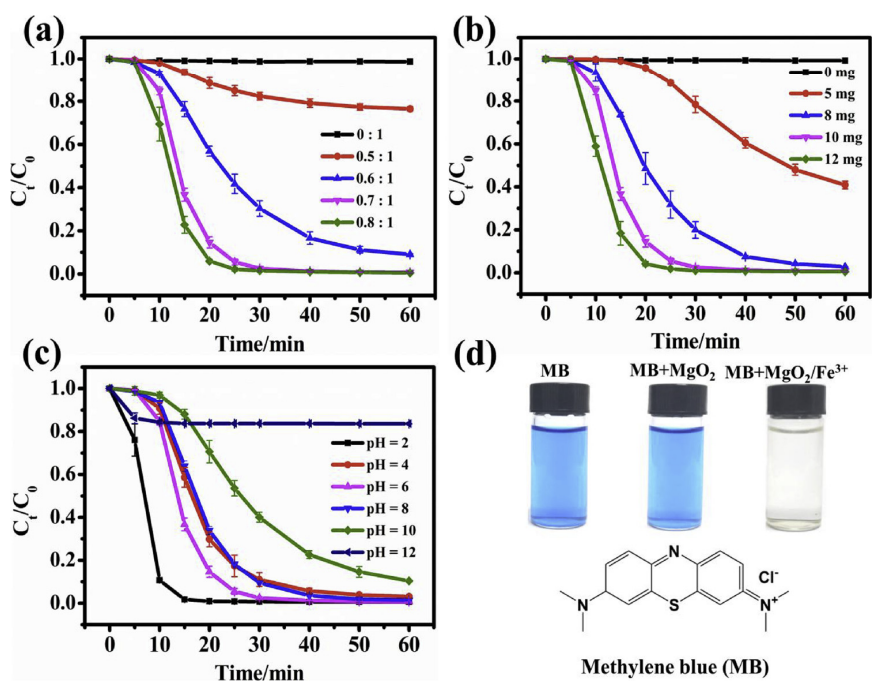
Dramatically enhanced degradation of recalcitrant organic contaminants in MgO2/Fe (III) Fenton-like system by organic chelating agents.
Yun Bai, Doudou Wu, Wei Wang*, Pei Chen, Fatang Tan, Xinyun Wang, Xueliang Qiao, Po Keung Wong
Environmental Research, 2021
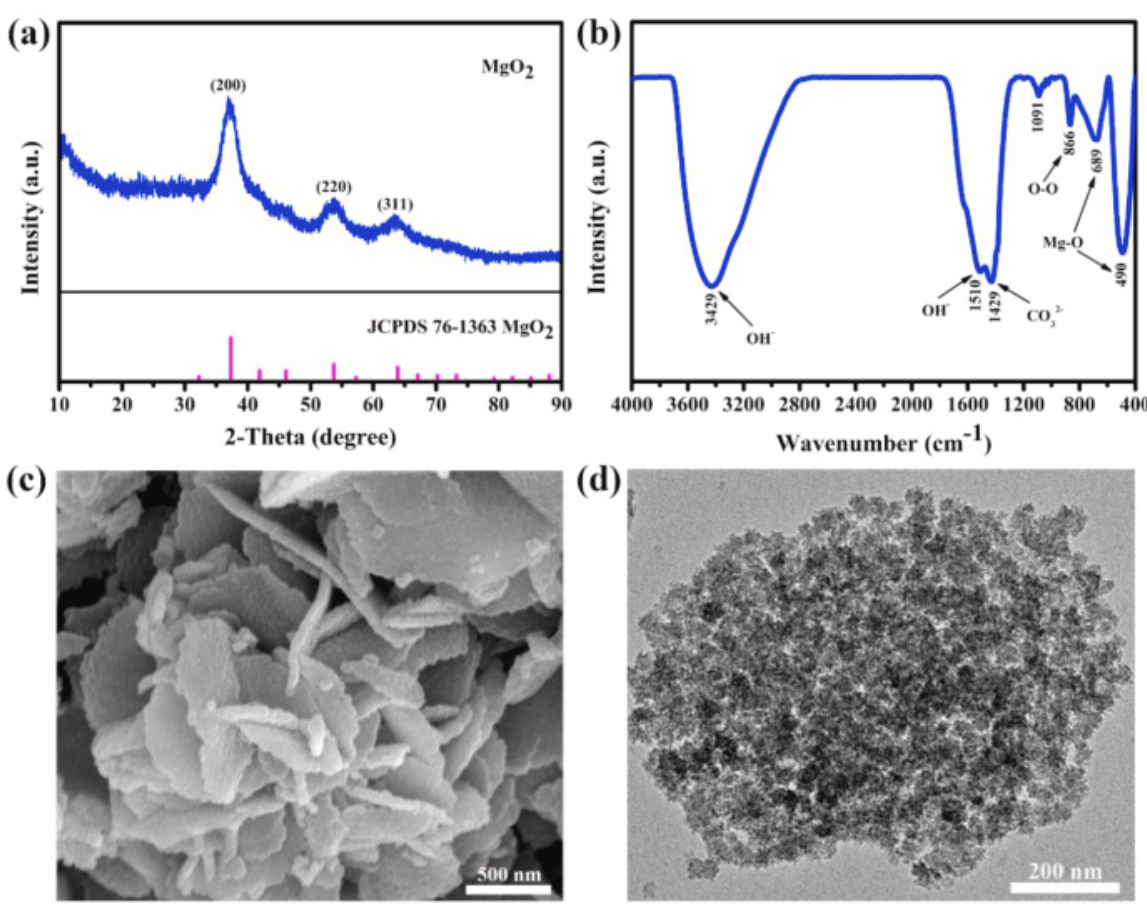
Highly pure MgO2 nanoparticles as robust solid oxidant for enhanced Fenton-like degradation of organic contaminants.
Doudou Wu, Yun Bai, Wei Wang*, Hongliang Xia, Fatang Tan, Shenghua Zhang, Bin Su, Xinyun Wang, Xueliang Qiao, Po Keung Wong
Journal of Hazardous Materials, 2019
Looking Ahead
I am actively seeking postdoctoral research opportunities beginning in early 2026.
Please feel free to contact me. I sincerely appreciate your consideration and the opportunity.
Curriculum Vitae
Currnt Address

Office:
FCIEMAS 3380
101 Science Dr.
Duke University
Durham, NC, USA
Contact
Email: yun.bai@duke.edu
Google Scholar: Yun Bai
LinkedIn: Yun Bai
Group Website: Ni Lab @ Duke